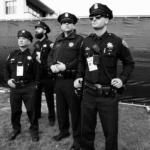
Grace Horikiri has been Executive Director of the Japantown Community Benefit District, Inc. (JCBD) since May 2018. She’s also a Japantown native who remembers a neighborhood police kiosk from her childhood, an officer everyone knew by name, and the classmates who grew up watching him and eventually became cops themselves.
That instinct for what community policing can look like at its best is what she and Deputy Director Brandon Quan are working to rebuild, one camera connection and one community meeting at a time.

123 Cameras, One Board Vote, and a Faster Path to Justice
The JCBD operates 123 cameras covering more than 233 viewing angles throughout the district, funded by a 2018 grant from Chris Larsen. For years, those cameras fed into the SafeCity Connect network, with CBD staff acting as the relay between footage and investigators.
The JCBD board recently voted to grant the San Francisco Police Department’s (SFPD) Real-Time Investigation Center direct access. Brandon, who manages the camera program and came to the CBD from a security background, described the practical impact: the people reviewing footage are now the people trained to know what they’re looking for.
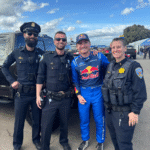
The partnership that made that decision possible grew out of necessity. During and after COVID, car break-ins targeting tourists surged in Japantown. SFPD undercover teams built direct working relationships with CBD staff, sometimes walking straight to the office after an arrest to retrieve footage.
“They had us on speed dial,” Brandon said. “Sometimes they didn’t even call. They’d just walk up and knock on the door.”
The Koban She Still Wants Back
Grace is honest about what she wants most from the future: foot beat officers. Japantown had them briefly, and she saw what they produced. She would also like to see the return of the koban. In Japan, kobans are small neighborhood police kiosks where officers are posted during the day, visible and accessible. Japantown had one for about a decade, roughly 40 years ago.
The officer who staffed it, known to the neighborhood as Kiyo, became part of the community in ways that lasted long after his assignment ended. One of Grace’s clearest memories: friends who grew up seeing officers who looked like them in that kiosk went on to become officers themselves.
“We want them to be part of the fabric of the neighborhood,” Brandon said. “Community policing is so much more important and effective than anything else.”
Comments are closed.