San Francisco has long been the place where the next big thing gets built first. That same spirit of invention is now reshaping how the city keeps its neighborhoods safe.
When voters passed Proposition E in March 2024, they gave the San Francisco Police Department (SFPD) a clear mandate: modernize.
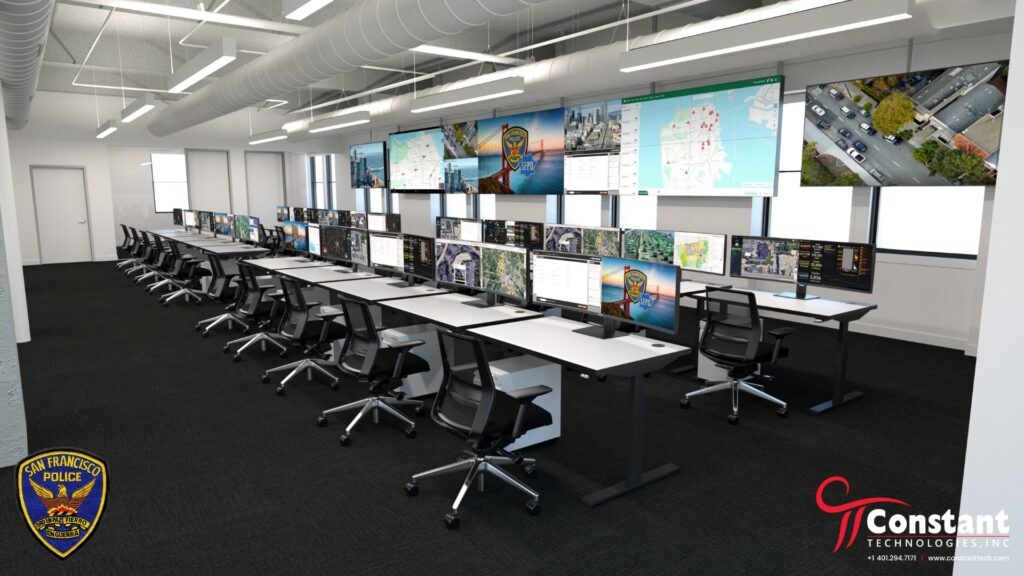
One of the primary results was the Real-Time Investigation Center, or RTIC. And as we covered in our recent post on the opening of the upgraded RTIC headquarters, what started in a windowless basement at the Hall of Justice has become one of the most sophisticated public safety operations in the country.
The new facility at 315 Montgomery Street in the Financial District runs 24 hours a day, seven days a week. Analysts monitor live feeds from drones and public safety cameras, communicating directly with officers on the ground as situations unfold.
The technology has supported more than 800 arrests since the RTIC launched, with auto burglaries down 75% and citywide crime down approximately 30% over two years. Car break-ins are at a 22-year low. Violent crime is at levels not seen since the 1950s.
Critically, the RTIC does more than catch criminals. Officers have used it to locate missing persons, assist people in mental health crises, and even support the Fire Department with aerial views of active fires.
This milestone was made possible by community investment. A $9.4 million donation from Ripple co-founder Chris Larsen, combined with support from the San Francisco Police Community Foundation and others, funded the move and equipment upgrades. Private philanthropy, civic technology, and community trust converged to create something the city can build on for decades.
“San Francisco is now back in its rightful place, leading the nation in technology innovation,” said Interim Chief Paul Yep, at the December 2025 opening.
San Francisco’s neighborhoods are distinct, layered, and worth protecting. The tools we invest in today determine what kind of city we hand to the next generation.
Comments are closed.